How to Analyze a Commercial Real Estate Offering Memorandum
You received an OM from a broker. Before you spend time on a tour, a model, or a deeper underwriting package, pull the key figures, check them against the PDF, and decide whether the deal deserves another look.
What an OM is
An offering memorandum is the broker’s marketing package for a property: usually a PDF with asking price or pricing guidance, income and expense highlights, occupancy or lease cues, property facts, and broker contacts. It is a starting package, not a complete diligence file. Rent rolls, T-12 statements, leases, and seller books often arrive later.
Figures to pull first
Most retail, office, and industrial OMs put these items near the front or in a financial summary:
- Asking price or priced guidance
- NOI as stated in the package (in-place, trailing, or pro forma — note which)
- Cap rate if shown, or the implied rate from NOI and price
- Occupancy / vacancy and any unit-mix summary
- Expense lines that are actually listed
- Broker contacts on the file
Write down the label the OM uses. “Year-1 pro forma NOI” and “trailing NOI” are not interchangeable, and the rest of the review depends on that distinction.
Six checks before you go further
The first two rows are checks you can often finish from the OM alone. The next ones need additional documents. CRE Pipeline does not invent those missing documents from a single OM upload.
-
Cap rate arithmetic. If the OM states NOI and price,
confirm
cap rate = NOI / price. If the stated cap does not match, find which NOI definition the broker used. - Missing expenses stay blank. If a line is absent from the OM, leave it blank in your notes. Do not fill gaps with round numbers just to complete a sheet.
- NOI versus T-12. Compare the OM NOI to the trailing twelve-month operating statement when you have the T-12. This is a document-to-document check, not something an OM-only pass can finish.
- Occupancy versus rent roll. Match occupancy, vacancy, and tenant mix to the rent roll when that schedule is available.
- Broker pro forma versus actuals. Separate marketed pro forma figures from in-place or trailing results before you treat either as the base case.
- Source page for each figure. Keep the PDF page or section where each number appears so a later review can reopen the same spot.
Worked example: Riverside Commerce Center (synthetic)
Riverside Commerce Center is a fabricated fixture for this page. The property, price, NOI, and tenants below are invented for teaching the checklist. They are not a live listing and not a client deal.
| Property | Riverside Commerce Center (synthetic) |
|---|---|
| Asking price | $8,400,000 |
| Stated NOI | $546,000 |
| Implied cap rate | $546,000 ÷ $8,400,000 = 6.50% |
| Check | Stated 6.50% matches the arithmetic on these two figures. |
That match only confirms internal consistency of the OM summary. It does not prove the NOI against a T-12 or the occupancy against a rent roll. Those checks still wait for the supporting files.
What CRE Pipeline does with an OM PDF
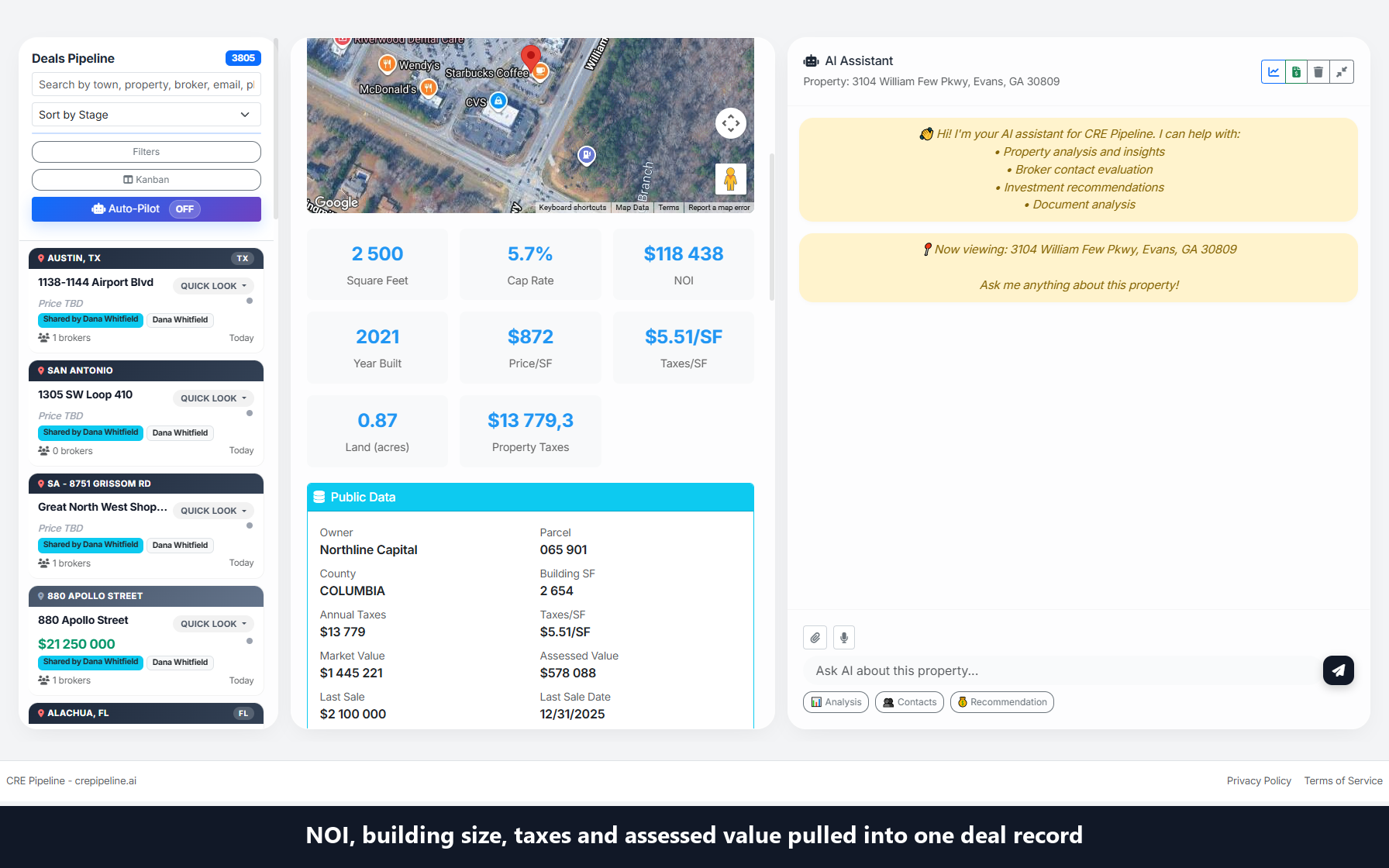
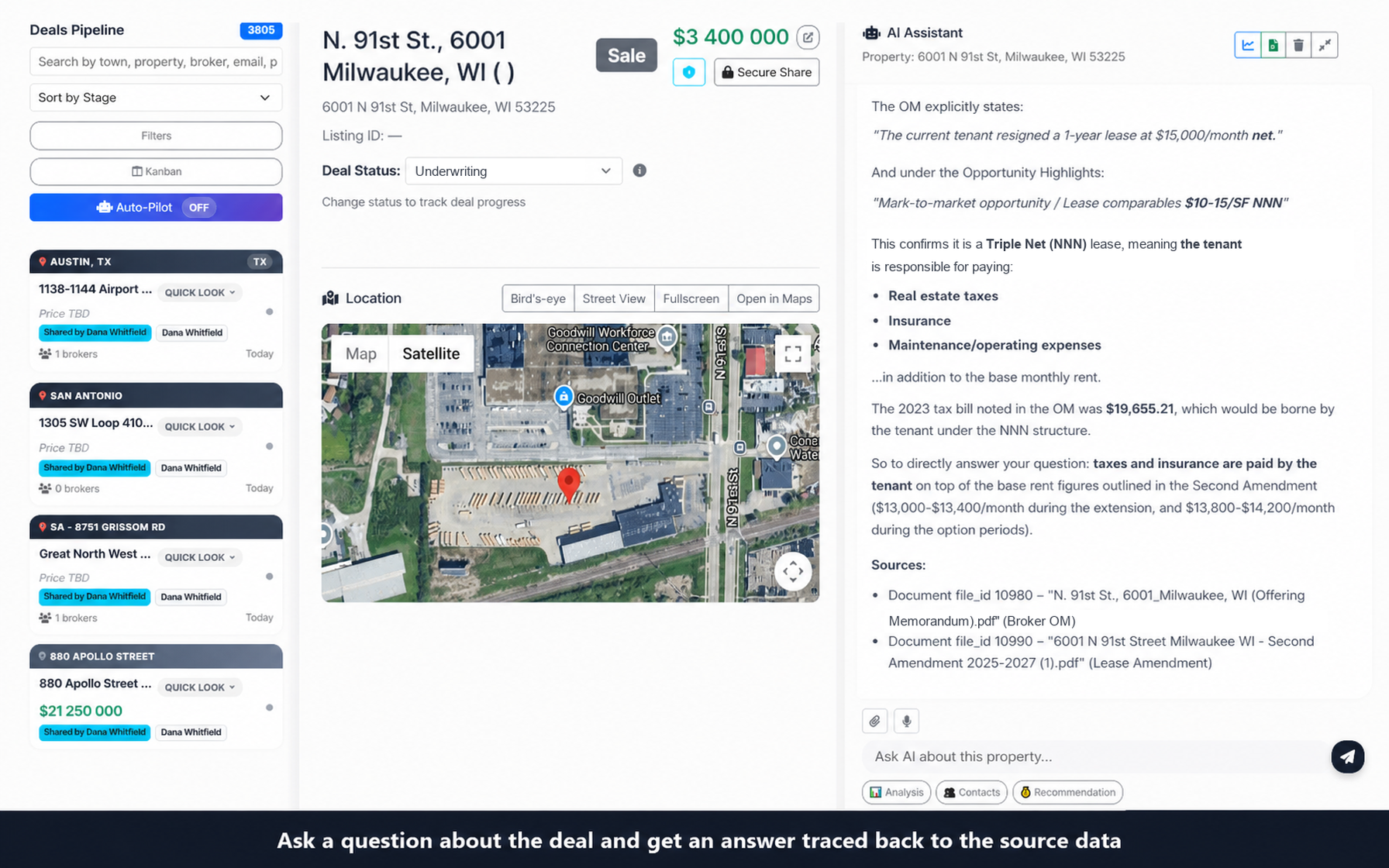
CRE Pipeline is deal-document software. After you upload a PDF OM, it builds a structured deal record from figures present in the file and keeps an AI chat scoped to that deal’s documents. Answers that use document text include a Sources block so you can open the cited file and verify the figure.
Manual work versus product behavior
- Analyst checklist above — deciding which NOI definition to trust, comparing to a T-12, and matching a rent roll remain your review steps when those documents exist.
- CRE Pipeline on one OM — extracts stated fields when present, leaves missing extraction fields empty, and cites document sources in chat. It does not automatically reconcile an OM to a T-12 or rent roll you have not uploaded.
Limits to keep in view
- Deal intake for this flow is PDF-based.
- The product focus is retail, office, and industrial packages.
- For document extraction and the deal record, fields missing from the source stay empty.
- High-Level Underwriting is separate: when uploaded documents are silent, that report can estimate expense lines from portfolio benchmarks and applies fixed assumptions (see Docs).
- Scan quality affects extraction. Prefer a readable text PDF when you have one.
This page does not claim measurement accuracy, time savings, human review of your file, or a complete underwriting package. Use the Sources block and the original PDF to confirm numbers that matter to the deal.
Create an account, upload one offering memorandum PDF, and review the structured deal record plus document chat. Continue on CRE Pipeline Monthly when you process a second document. Details on Pricing and Docs.
Analyze your first OM free