Comparing buyer duties to deliver third-party reports after a retail purchase agreement ends
In the Salisbury Marketplace purchase agreement, a buyer whose deal ends can still owe the seller its third-party reports. If the seller asks, the purchaser must assign and deliver all third-party reports it obtained while reviewing and inspecting the property, at no cost or expense to the seller. The section below sets out when this applies. The Woodlake Square Shopping Center agreement is harder to read on this point. Its available excerpt gives the buyer until the end of the inspection period to approve or disapprove matters the survey discloses, and it has no comparable delivery clause. For that agreement, the question stays open until someone reads the full text. [SEC filing] [SEC filing]
AI-assisted writing with automated source checks. The suggested steps are optional. Use the underlying deal documents for your own checks.
What the Salisbury Marketplace clause requires
The clause has two triggers. The first is the purchaser electing to terminate before the inspection period expires. The second is the purchaser failing to close for any reason. Read the full clause for any exception to that second trigger. Neither trigger creates the duty alone, because the obligation applies only if the seller requests the reports. Once the seller asks, the purchaser must assign the reports and deliver them, so sending copies may not satisfy the wording. The scope covers all third-party reports obtained in connection with the purchaser's review and inspection of the property, and the seller bears no cost or expense. [SEC filing]
The same agreement contains other inspection terms. The seller may have a representative present at any tenant interview. The purchaser indemnifies the seller for loss or damage caused by its inspection. That indemnity does not cover a pre-existing condition the purchaser merely discovered and did not aggravate. Keep these terms in mind when planning inspections and ordering reports. [SEC filing]
What the Woodlake Square excerpt shows
The Woodlake Square excerpt deals with the survey. If the buyer disapproves of something the survey discloses, it gives the seller written notice. The excerpt also addresses what happens when the buyer fails to give that notice on time. It says nothing about delivering reports to the seller after termination. [SEC filing]
A procedure you can repeat on any agreement
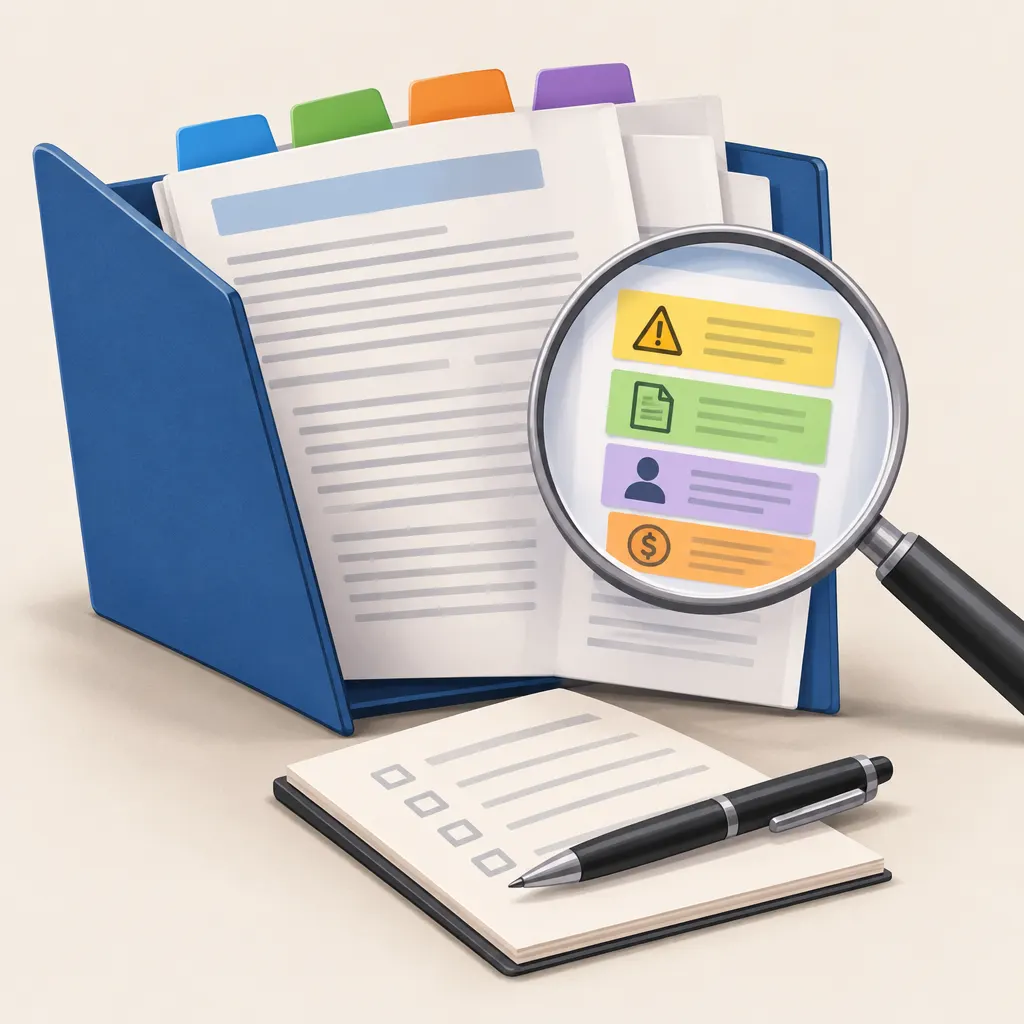
One optional method is to open the inspection or due diligence section first. Then search the whole agreement for phrases such as third party reports, assign and deliver, terminate and fails to close. For each clause you find, write down what triggers the duty, whether the seller must request the reports, which reports are covered, who pays, and whether the clause calls for assignment, delivery or both. Asking the same questions of every agreement keeps the comparison consistent, and the Salisbury clause shows that each answer can matter. [SEC filing]
It also helps to note where each clause appears and copy its operative sentence into your working notes. Keep survey duties on a separate line from post-termination report duties. In Woodlake Square, the buyer's survey review runs until the inspection period expires. A survey review deadline is a different obligation from handing over reports after a deal ends. [SEC filing]
Where the Salisbury duty stops
Under the Salisbury wording, the delivery duty depends on a request from the seller, and it reaches reports obtained in connection with the purchaser's review and inspection. If the deal ends without either trigger occurring, or the seller never asks, the text does not impose the duty. The clause does not mention reports produced for any other purpose. [SEC filing]
Avoid applying the Salisbury rule to Woodlake Square or any other agreement, since each contract sets its own terms. A clause missing from an excerpt may appear elsewhere in the full document, so its absence from partial text does not tell you what the agreement requires. [SEC filing]
Recording an item you cannot resolve
Use one of two labels for each agreement. Record "Clause found" when you locate a delivery clause, with its location and operative sentence. Record "Not found in reviewed text (open)" when you do not, and list the sections or excerpt you actually read. For an open item, name the complete filed purchase agreement as the document that would settle it. For Woodlake Square, the entry would read "Not found in reviewed text (open)", note that the survey terms were reviewed, and name the complete Woodlake Square purchase agreement as the next document to read. Leave the entry open instead of borrowing an answer from the Salisbury agreement. [SEC filing]
Limitations
This comparison draws on two filed agreements and only partial text from each. The Woodlake Square excerpt refers to similar state laws and regulations, and it does not address report delivery. Your own agreement may handle the question differently. This guide does not interpret either contract and is not legal advice. [SEC filing] [SEC filing]
Sources and scope
- SEC filing, checked 2026-11-22
- SEC filing, checked 2026-11-22
Check any AI answer against the original PDF. The process described here is not a guarantee of accuracy or an investment recommendation.
Create an account, upload one offering memorandum PDF, and review the structured deal record plus document chat. Continue on CRE Pipeline Monthly when you process a second document. Details on Pricing and Docs.
Analyze your first OM free